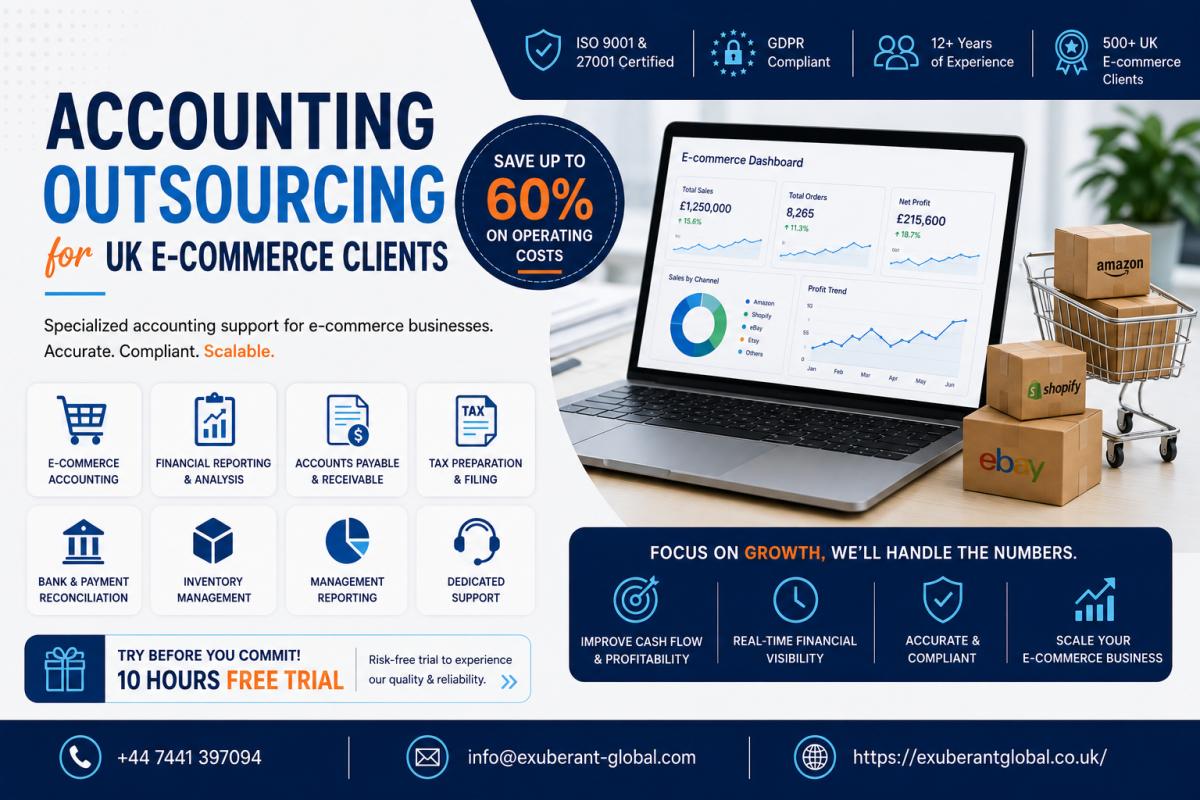
Accounting Outsourcing for UK E-commerce Clients
Running an online shop in the UK? The financial side hits you harder than you expect. The digital marketplace moves ridiculously fast, and keeping up with accounting requirements becomes this massive distraction when you'd rather focus on growing sales and making customers happy.
In-house accounting just doesn't work for modern e-commerce. Period. Multiple sales channels, international payments, VAT nightmares, inventory chaos — it creates financial tangles that need people who actually understand this stuff. Plenty of successful online retailers learned that outsourcing accounting isn't about cutting corners. It's survival if you want real growth.
Professional accounting outsourcing gives you systems designed for digital commerce reality. Whether you're handling marketplace fees across Amazon, eBay, and Shopify or wrestling with international tax complications, specialised providers understand the weird details that can sink online businesses. Lets you focus on what you're actually good at while keeping money stuff sorted.
The Benefits of Accounting Outsourcing
Outsourcing your accounting needs can turn a burden into a strength for UK e-commerce clients.
Simplifying E-commerce Accounting Challenges
E-commerce accounting bears zero resemblance to traditional retail bookkeeping. Online businesses juggle multiple payment processors, bizarre fee structures, and complex inventory systems that make regular accountants panic.
Revenue from Multiple Platforms Is a Headache
Money coming from different platforms? Complete chaos.
Amazon FBA fees, PayPal cuts, Stripe charges, marketplace commissions — every penny needs proper recording and reconciliation. Each platform spits out reports in different formats at different times that completely break standard accounting systems. Professional outsourcing providers use software built specifically for e-commerce operations. They know how to categorise fee types correctly; handle refunds and chargebacks without losing their minds; and maintain accurate records across sales channels that actually make sense. This expertise prevents costly mistakes that trigger HMRC investigations or create cash flow disasters.
VAT Rules Will Drive You Mental
UK e-commerce businesses deal with VAT rules that change constantly, especially selling internationally. Brexit made EU sales even more complicated. Digital services tax keeps shifting too.
Entrepreneurs struggle with VAT registration requirements across different countries and handling cross-border transactions properly. Outsourced teams stay current with regulatory changes and ensure compliance everywhere you operate. They handle VAT returns, watch thresholds, and provide guidance on tax-efficient structures for international expansion.
Why Accounting Outsourcing Actually Works
Outsourcing delivers immediate cost savings and operational improvements that hit your bottom line hard. Most UK e-commerce businesses find they access better services at lower costs than keeping teams internal.
Money and Flexibility
Hiring qualified accountants costs way more than outsourcing equivalent work. Senior professionals demand high salaries plus benefits, training, and software costs. Outsourcing gives you entire specialist teams for fractions of internal hiring costs.
Services scale with business growth automatically. During peak seasons like Christmas or Black Friday, accounting workloads explode without warning. External providers handle volume spikes without hiring permanent staff. This flexibility saves seasonal businesses or rapidly growing companies.
Tech That Actually Helps
Professional outsourcing companies invest heavily in automation tools and cutting-edge software. They use cloud systems that connect directly to major e-commerce platforms, automatically importing transaction data and categorising expenses properly.
Tech advantages include real-time financial reporting, automated inventory tracking, and sophisticated analytics that identify profit trends and cost optimisation opportunities. Small businesses gain access to enterprise-level tools without massive upfront investments.
People Who Get This Stuff
Outsourcing providers employ specialists who understand e-commerce accounting completely. They stay updated on changing tax laws, accounting standards, and industry practices. This expertise helps businesses avoid compliance disasters while optimising financial strategies.
Regular training ensures outsourced teams maintain current knowledge. They work with hundreds of e-commerce clients, gaining broader experience than in-house staff working for single companies.
Picking the Right Partner
Finding appropriate outsourcing partners requires careful evaluation of experience, tech capabilities, and service offerings. A wrong choice creates bigger problems. Due diligence matters.
Experience Matters More Than You Think
Successful relationships depend on providers who understand e-commerce businesses completely. Look for companies with substantial experience serving online retailers, particularly those familiar with your specific platforms and models.
Ask potential providers about client portfolios and case studies. They should demonstrate familiarity with major e-commerce platforms, payment processors, and the unique challenges facing UK online businesses. Generic accounting firms often lack specialised knowledge.
Tech Integration Can't Be an Afterthought
Modern accounting outsourcing requires seamless technology integration. Providers should offer direct connections to your e-commerce platforms, payment processors, and inventory management systems. Manual data entry introduces errors and delays that defeat outsourcing benefits completely.
Evaluate reporting capabilities carefully. You need regular financial statements, cash flow projections, and performance analytics presented in formats that support actual decision-making. The best providers offer customisable dashboards and automated reporting schedules that keep you informed without constant back-and-forth.
Communication That Works
Clear communication protocols prevent misunderstandings and ensure smooth operations. Establish expectations for response times, regular check-ins, and escalation procedures before signing anything.
Cultural fit matters — providers should understand UK business practices and communication styles. Consider time zone differences if evaluating offshore providers. Cost savings might look attractive, but communication challenges and regulatory knowledge gaps often outweigh financial benefits for UK e-commerce businesses.
What You Need to Remember
- E-commerce accounting needs specialised expertise that traditional accountants lack.
- Professional outsourcing provides access to advanced technology, improving accuracy and compliance.
- Cost efficiency comes from accessing specialist teams cheaper than in-house staff.
- VAT compliance demands current expertise that specialised providers maintain through continuous training.
- Technology integration and industry experience matter when selecting partners.
- Clear communication and cultural alignment support successful partnerships.
Questions People Keep Asking
How much can UK e-commerce businesses save by outsourcing accounting?
Most businesses save 30-50% compared to hiring equivalent in-house staff. Savings include salaries, benefits, training costs, and software expenses. Additional value comes from improved accuracy and compliance.
What e-commerce platforms do outsourcing providers support?
Professional providers support major platforms including Amazon, eBay, Shopify, WooCommerce, Magento, and BigCommerce. They integrate with payment processors like PayPal, Stripe, and Square.
How do outsourced accountants keep data secure?
Reputable providers use bank-level encryption, secure cloud storage, and strict access controls. They comply with GDPR requirements and hold professional indemnity insurance.
Can outsourced accounting services support business growth?
Quality providers offer strategic financial analysis, cash flow forecasting, and performance metrics that inform growth decisions.
What happens if issues arise with outsourced accounting services?
Professional contracts include service level agreements, escalation procedures, and performance guarantees. Dedicated account managers ensure continuity.
How quickly can businesses transition to outsourced accounting services?
Typical transitions take 2-4 weeks depending on complexity. Providers offer transition support, including data migration and staff training.
Do outsourced accounting services include bookkeeping and tax preparation?
Most packages include daily bookkeeping, monthly financial statements, VAT returns, and annual tax preparation. Clarify service inclusions before committing.
Are there minimum contract terms for outsourcing services?
Contract terms vary, with many offering monthly arrangements after initial setup. Some require 6-12 month commitments for better rates.
Accounting outsourcing represents a strategic advantage for UK e-commerce businesses ready to scale efficiently. The combination of cost savings, specialised expertise, and advanced technology creates competitive advantages supporting sustainable growth. Choosing partners who understand e-commerce intricacies leads to solutions that drive business success.
Ready to Scale Your Business?
Connect with our experts to learn how our outsourcing solutions can drive growth.
Book a Discovery Call