If you run a small business in the UK, there's a good chance the word "bookkeeping" makes your stomach sink a little. It's not that the work is hard exactly — it's that it's endless. Receipts pile up, invoices go unchased, and by the time your accountant asks for last quarter's numbers, you're digging through a shoebox (or worse, a messy folder on your desktop called "Finance - FINAL - v3").
This is exactly the gap an offshore bookkeeper is built to fill. And because it's become such a common option for UK businesses, it's worth actually explaining it properly — not in sales language, but in plain terms: what it is, what it costs, what it's actually like day to day, and how to avoid getting burned by a bad provider.
What Is an Offshore Bookkeeper?
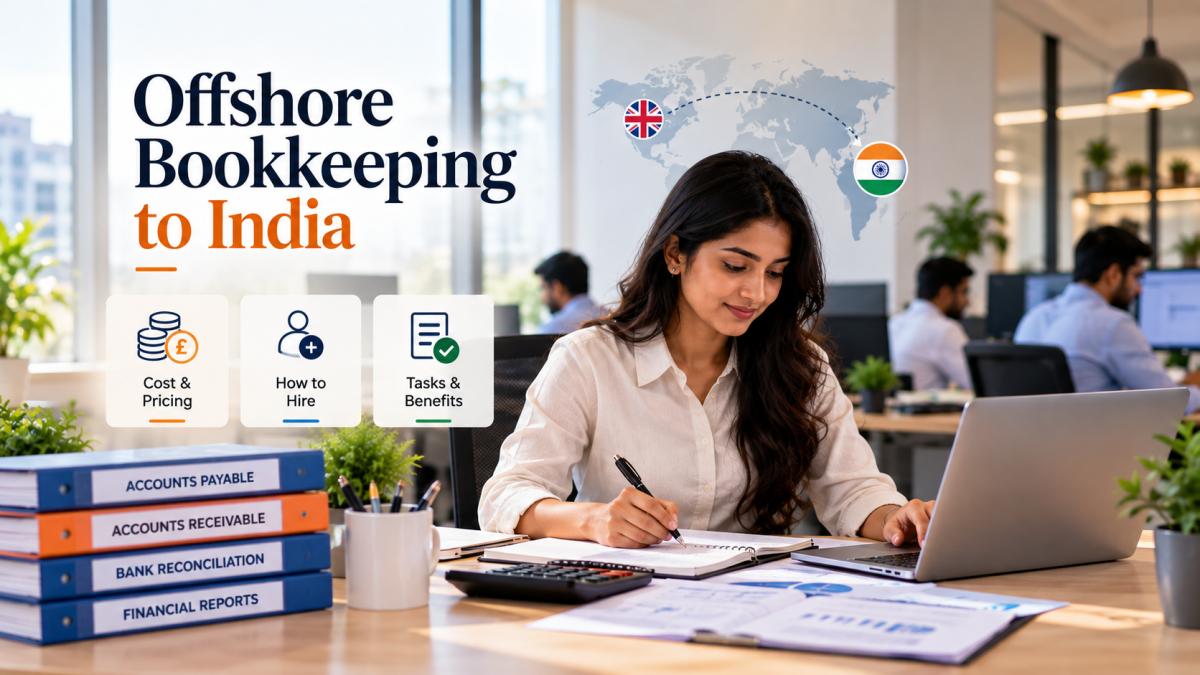
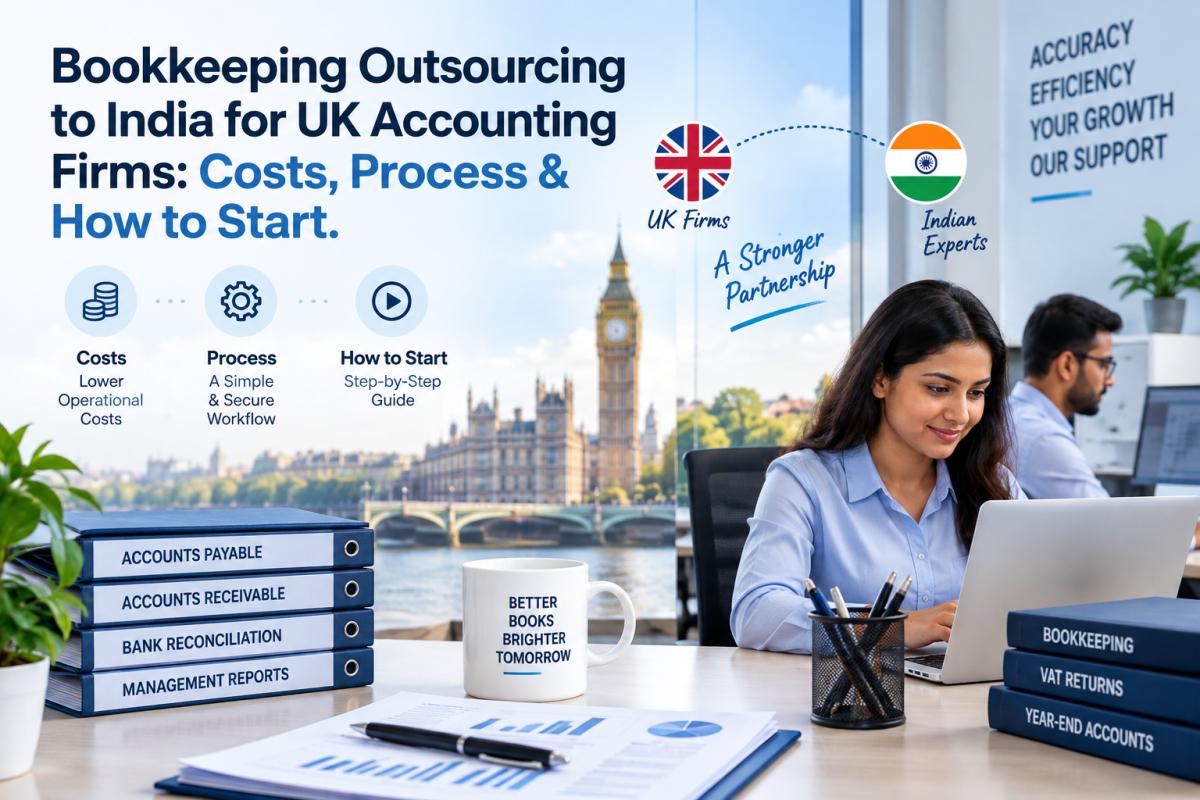
An offshore bookkeeper is simply a qualified bookkeeper who does your books from another country — most commonly an offshore bookkeeper in India, since that's where most UK firms source this kind of support. They're not a separate company doing your accounts in some black-box system you never see. A properly set up offshore bookkeeper logs into your own Xero, QuickBooks, or Sage account, and does the same work a UK-based bookkeeper sitting in your office would do.
Think of it less like "outsourcing" in the vague, impersonal sense, and more like hiring a remote team member who happens to live somewhere with a lower cost of living. Same tasks, same software, same standards you'd expect from anyone touching your finances — just at a fraction of the UK employment cost.
It's also worth being clear about what it isn't. It isn't the same as a freelance bookkeeper you find on a marketplace site and hope for the best with. And it isn't the same as a big anonymous outsourcing company where your data gets exported somewhere and handled by whoever's free that day. A good offshore bookkeeping setup gives you one named, dedicated person (sometimes with a backup), who gets to know your business specifically.
In short: an offshore bookkeeper in India (or elsewhere) does the same recordkeeping, reconciliation, and reporting work a UK bookkeeper would — inside your own accounting software — for roughly a third of the typical UK cost.
Who Actually Uses This? (It's Probably More People Than You Think)
People sometimes assume outsourced bookkeeping is only for big companies, but in reality the businesses that benefit most are usually small ones:
- Sole traders and freelancers who are drowning in admin they didn't sign up for
- Small limited companies that have outgrown a spreadsheet but can't justify a full-time hire yet
- E-commerce sellers with a high volume of small transactions across multiple platforms
- Accounting and bookkeeping practices themselves, who use offshore staff to handle client volume during busy periods
- Landlords with several properties who need clean, consistent records for tax purposes
If your own answer to "how's the bookkeeping going?" is a slightly guilty laugh, this is probably relevant to you.
What Does an Offshore Bookkeeper Actually Do, Day to Day?
This is the part people are usually most curious about — and a little unsure of. Here's what's genuinely covered:
| Task | What It Actually Looks Like |
|---|---|
| Daily transaction entry | Every payment in and out gets categorised properly, as it happens, rather than in one exhausting batch at month-end |
| Bank and card reconciliation | Your bank feed is matched against your books line by line, so nothing quietly slips through unnoticed |
| Invoicing and chasing payment | Invoices go out on time, and overdue ones get followed up so cash flow doesn't quietly dry up |
| Paying suppliers on time | Bills get logged and paid before they're late, protecting supplier relationships and any early-payment discounts |
| VAT returns | Prepared in a way that's ready for Making Tax Digital submission, checked and clean before it goes anywhere near HMRC |
| Monthly reports | A profit and loss statement, balance sheet, and cash flow summary, so you actually know how the business is doing — not guessing |
What they won't do is make judgment calls on grey-area tax questions, give you advisory input on business strategy, or sign off your statutory accounts. That's your accountant's job, and a good offshore bookkeeper knows exactly where their lane ends and hands things over cleanly.
Why This Has Become Such a Common Move for UK Businesses
This isn't just a cost-cutting trend — there are a few very real, very current pressures pushing UK businesses toward it:
Making Tax Digital is expanding. From April 2026, Making Tax Digital for Income Tax brings a whole new group of sole traders and landlords into quarterly digital reporting. That's a permanent jump in bookkeeping workload for anyone affected, not a one-off adjustment.
Finding a good bookkeeper in the UK is genuinely hard right now. There's a well-documented skills shortage in accounting and bookkeeping roles. Even if you wanted to hire locally, you might spend months trying — and pay a premium once you do.
Companies House now expects more. Identity verification rules and the move toward digital-only filing mean more admin sitting on someone's desk. An offshore bookkeeper who takes the routine load off frees up you (or your in-house team) to deal with the bits that actually need a human decision.
Offshore Bookkeeping Pricing: What You'll Actually Pay
This is usually the question everyone actually wants answered first, so here it is straight — with real numbers, not vague ranges designed to get you on a sales call.
| Option | Typical Monthly Cost | What You Actually Get |
|---|---|---|
| UK in-house bookkeeper | £2,500 – £3,500+ | Salary, pension contributions, National Insurance, plus office overhead on top |
| Dedicated offshore bookkeeper in India | £700 – £950 | A full-time person, dedicated to your business, working directly inside your own software |
| Freelance bookkeeper (hourly) | Varies by volume, typically £15–£35/hour | Fine for very light or seasonal workloads, but no guaranteed availability or backup cover |
The reason for that gap isn't quality — it's simply cost of living and local wage economics, exactly the same reason software development and customer service moved offshore over the last twenty years. If you outsource bookkeeper work and get a quote way under this range, that's not a bargain — it usually means there's no proper review process behind it, or the person hasn't been trained properly. Cheap bookkeeping that's wrong ends up costing you far more later, in HMRC penalties or a mess your accountant has to untangle.
Offshore Bookkeeper vs Freelance Bookkeeper: Which One Actually Fits You?
These two options get lumped together a lot, but they solve different problems.
A freelance bookkeeper makes sense if your bookkeeping needs are genuinely small — a few hours a month, nothing complex, and you're comfortable with the fact that if they're sick, on holiday, or simply move on to other clients, there's no backup and no continuity.
A dedicated offshore bookkeeper makes more sense once your transaction volume is regular enough that you need someone who shows up consistently, knows your specific setup, and has a manager reviewing their work in the background. It costs a bit more than a casual freelancer, but you're paying for reliability and accountability, not just hours.
How to Spot a Good Provider vs a Risky One
This is genuinely the part that matters most, because the model itself works well — the risk is almost always in who you pick, not in the concept of offshoring itself.
| Signal | Good Setup | Risky Setup |
|---|---|---|
| Who's doing the work | One named person, assigned to you specifically | A rotating pool — different person each time, no continuity |
| Quality checks | A senior person reviews the work before you ever see it | No second pair of eyes — mistakes go straight through |
| Where your data lives | They work inside your own Xero/QuickBooks account — you keep full control | Your data gets exported into their own separate system |
| If the fit isn't right | Easy, fast replacement, no drama | Resistance, delays, or a contract renegotiation just to switch someone out |
| Getting started | A proper trial period before any long-term commitment | Pressure to sign a 12-month contract on day one |
Before you commit to anyone, ask three direct questions: who reviews the work before it reaches me, where exactly is my data processed and by whom, and what happens if the person assigned to me isn't a good fit. If the answers are vague or rehearsed, treat that as your real red flag — not the fact that the work happens outside the UK.
What About Data Security? (The Question Everyone Asks Eventually)
This is usually the concern sitting underneath all the others, and it deserves a proper answer rather than a reassuring shrug. A properly run offshore bookkeeping relationship should include individually signed NDAs at staff level — not just a general company-wide policy nobody's actually read — role-based access so people only see what they need to, and a documented data processing agreement that lines up with UK GDPR requirements. You can read more about what proper data security in an outsourcing relationship should actually look like before you commit to anyone.
What Getting Started Actually Looks Like
In practice, it's a lot less complicated than people expect:
- You have a short call to talk through your current setup, software, and what's currently taking up too much of your time
- You're matched with (or introduced to) the person who'll actually be doing your books
- They get access to your existing Xero, QuickBooks, or Sage account — nothing new to migrate
- You run a trial period, usually with your first month or two of work reviewed closely by both sides
- Once you're both happy, it settles into a normal working rhythm — usually with a short weekly or monthly check-in
Common Questions People Ask Before Making the Switch
Do I need to already have a lot of transactions before this makes sense? Not really — providers typically scale from a few hours a month right up to a full-time dedicated hire, so it's about fit, not hitting some minimum threshold.
Will they actually understand Xero or QuickBooks the way I've already got it set up? A properly trained offshore bookkeeper should already be fluent in the software itself, and adapt to your existing chart of accounts — you shouldn't have to restructure anything to suit them.
Can they actually handle UK VAT and Making Tax Digital? Yes, but only if they've been specifically trained on UK VAT rules and MTD requirements — general bookkeeping experience alone doesn't automatically cover that, so it's worth confirming directly rather than assuming.
Is this basically the same as hiring someone full-time, just abroad? Pretty much — a dedicated offshore bookkeeper works much like a remote employee inside your own systems, minus the overhead of a formal UK hiring process.
Should I go with an agency, or just hire a freelance bookkeeper myself? A freelance bookkeeper can work fine for very light, occasional needs. But you lose continuity and backup cover if they're ever unavailable. Going through a proper agency for a dedicated offshore bookkeeper solves exactly that gap.
What's the easiest way to actually try this out? Most people start with just one function — usually bookkeeping or VAT prep — run as a trial, before expanding into payroll or anything wider once the fit's been proven. Our broader guide to outsourcing to India covers that fuller picture if this is the first step toward a wider relationship.
The Bottom Line
An offshore bookkeeper isn't a cut-price shortcut — done properly, it's a dedicated, reviewed, properly integrated part of your finance function, that simply costs a lot less because of where the person is based, not because the standard is lower. The details are what actually matter: who's doing the work, who's checking it, and whether you can genuinely see the quality for yourself during a trial before you commit to anything long-term.
If you'd like to see what this looks like in practice, Exuberant Global's outsourced accounting team works inside your existing software from day one, or you can hire a dedicated accountant directly if you'd rather build out a specific role.
Ready to Scale Your Business?
Connect with our experts to learn how our outsourcing solutions can drive growth.
Book a Discovery Call