Differences Between Accountants that Outsource and Accountants that Don’t
Introduction
The last ten years have seen a massive shift in the accountancy profession, highlighting the difference between accountants that outsource and accountants that don't.
Regardless of size, UK firms have had to make some important choices about how to structure their infrastructure, and one of the most fundamental decisions concerns whether to outsource day-to-day operational functions or keep them firmly in-house.
The contrast between accountants that outsource and accountants that don't isn't purely about how they operate—it ultimately affects profitability, client service, and growth capacity.
Successful firms are executing outsourcing agreements to bring in additional capacity, while others continue to plod away at an ever-growing mountain of work that ultimately constrains their growth.
Here's exactly what differentiates the two sides and why outsourcing is on the rise throughout the UK accounting sector.
Capacity and Efficiency - How Outsourcing Changes the Equation
When a firm gets down to the operational basics, the constraint is the same for all: time.
There are only so many times in the day, and when the majority of those hours are spent on routine bookkeeping or payroll, strategic services are sadly neglected.
The fundamental operational difference for a firm that outsources as opposed to one that keeps everything in-house is pretty much a time crunch hidden inside a bigger workload discussion.
Larger, flexible workforces for outsourcing firms
They can provide seasonal or fluctuating support on a national or international scale.
In other words, UK outsourcing firms can rapidly increase headcount during tax return season or year-end or quarterly reporting peaks without having to pay expensive permanent staff wages.
These support options can do wonders for a firm's bottom line without forcing her to turn away a growing portfolio of clients.
Exuberant Global (based in New Delhi) has partnered with UK firms for over 11 years, providing flexible, part-time or full-time, remote accounting support precisely when they need it.
Whether it's bookkeeping, payroll prep, creditors, debits, receivables, or UK corporation tax reporting requirements, experienced accountants handle the processes in compliance with UK law and the company's internal procedures.
Smaller, non-outsourcing firms
When all the work takes place within the premises of a B-brand chartered accountancy practice, growth can be financially prohibitive.
U.K. Firms that are reluctant to go the outsourcing route spend a lot of money on an in-house accountant and never really seem to get ahead.
The need to continually face recruitment challenges in the UK just to keep outsourcing providers with growth can take a toll on morale, and rent, software licences, employee benefits, and training still have to be paid for when lack of client capacity prevents growth.
Economics of Cost Structures
Delivery speaks the loudest in terms of the cost-benefit of in-house operations.
In-house accountants underestimate their fixed costs and over-value their relative productivity.
When salaries, NI, operational overhead, insurance, and employee perks are taken into account, automation invariably lacks value. Prime candidate for a shift toward outsourcing.
Does outsourcing provide cost benefits without sacrificing quality?
For UK firms the tell-tale sign of difference is the bottom line—the savings from outsourcing versus keeping it in-house.
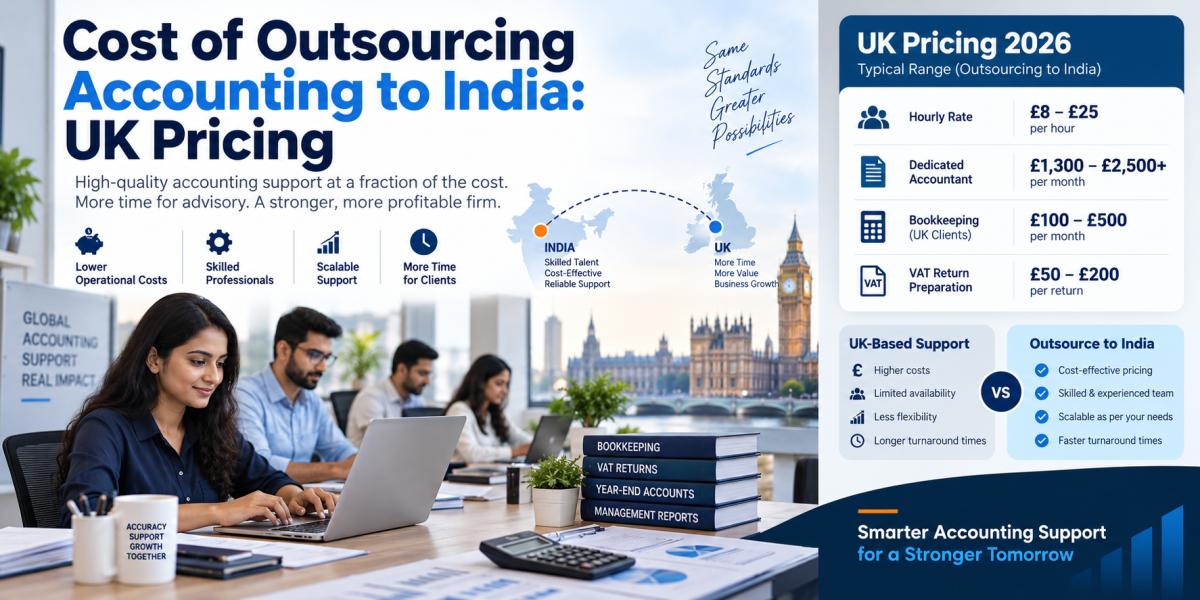
Exuberant Global, an outsourcing provider, has been able to provide high-level outsourced financial reporting and tax preparation services to British-based companies at a fraction of the cost of an equivalent-sized internal department.
By business and geographical necessity, these dedicated outsourced professionals reside in India, where the operational costs are a fraction of the costs in the UK.
Then again, they are not generalist, less-than-qualified generalists; they are CPA-trained, software-fluent specialists at a decent hourly rate, using worldwide tools such as Xero, QuickBooks, Sage, and IRIS.
Zero onboarding, no training, always consistent and on-time.
As outsourcing is the industry's new normal, Brits compete on service speed, breadth, and quality—all at a lower rate than they could ever command in-house.
On the flip side: in-house efficiency is normally understated
When a firm keeps everything in house, the added costs are often significantly left out of the calculations.
For example, when a senior accountant spends three hours doing bank reconciliations that could have been done for a third of that time on an outsourced team, the business is missing what should be a multimillion-dollar investment in their own future, exactly three hours they could have applied toward advisory services.
The effects of this cost difference—expressed in revenue terms—are not immediately apparent but, over a three-year timeframe, are easily recognisable and impactful.
Delivery Dynamics
Client satisfaction is ever-changing in the UK accountancy marketplace.
Clients are expecting faster turnarounds and more service for the same or lower fees.
The greatest difference between accountants that outsource and practices that keep everything in-house is the impact on client communication and relationships.
Outsourced models foster faster service and greater capabilities
When compliance tasks, daily mailbox management, or routine reconciliations fall to an outsourcing group, accountants from the in-house practice have time to shape their services around business owners needs—focusing on their core strengths: strategic advice, tax planning, and overall business growth.
In partnerships with firms like Exuberant Global, clients can flex digital, day-to-day bookkeeping, payroll, or other financial assistance without worrying about pulling their accountancy practice away from core work.
The result? Faster responses, greater analysis, and a more comfortable client experience for everyone.
In-house practices struggle to offer breadth
That's fine until the client wants something the internal staff can't match in terms of speed or depth.
A practice with 3 partners cannot compete on breadth of services with a practice with 3 accountants supported by an outsourced virtual third-party team of 10.
Their user experience morphs into a tangle of slow, overworked staff and lower-value offerings, so the clients begin demanding the firms that can deliver more, more quickly, and still offer competitive rates.
Conclusion? This isn't just a quirk of anecdotes; it reflects a very real trend advancing rapidly through the UK accountancy industry.
Difference Between Accountants That Outsource vs Don't
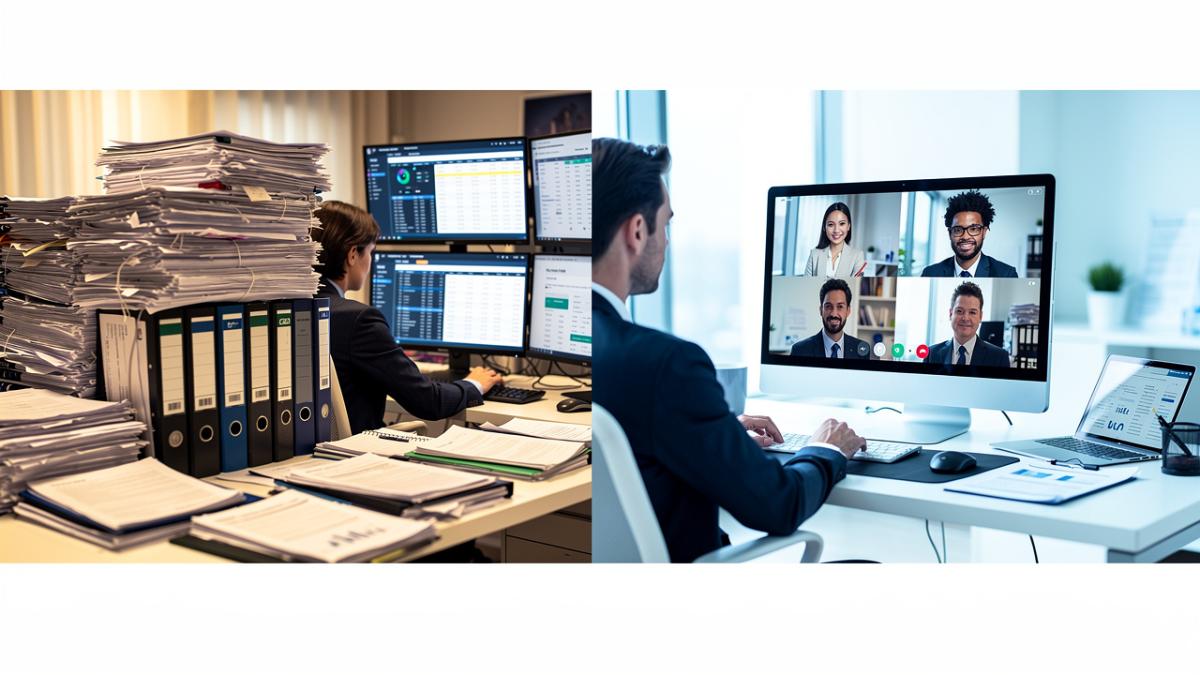
Choosing to outsource vs. to keep everything in-house is not an easy decision—of course it depends on your firm's resources and strategy—but the implications for profitability, workload, and clients are significant. Larger, more efficient firms with higher levels of outsourced services are growing faster, serving more clients and wielding lower-cost models. Smaller, less efficient firms with lower levels of outsourced services are working harder to maintain momentum, paying more for overheads and with less capacity for growth.
Exuberant Global has over many years experience helping UK accounting practices overcome exactly this challenge. Whether you require ongoing bookkeeping for your practice, occasional hourly assistance for your seasonal tax issues, or a dedicated employee for a new team member, the resources and expertise are available. The UK accounting firms that succeed are not always the ones with the biggest staff but the most intelligent decision-makers.
The choice to outsource may be the most valuable thing you do for your practice this year.
Ready to Scale Your Business?
Connect with our experts to learn how our outsourcing solutions can drive growth.
Book a Discovery Call